



Ceramic Veneers in Vilnius: Perfect Smile Aesthetics
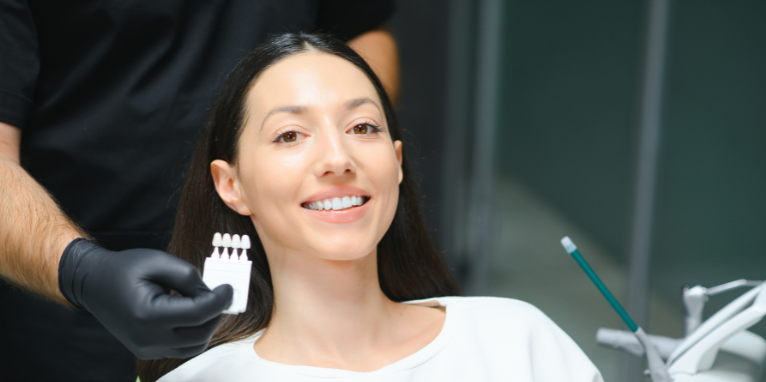
Ceramic veneers are thin overlays from high-strength ceramics 0.3-0.7 mm thickness fixed on front teeth surface completely transforming smile. Technology allows changing shape, color, size, creating ideal proportions, closing gaps, hiding defects. Ceramic veneers - aesthetic dentistry pinnacle with impeccable natural appearance, 15-20 years longevity and absolute color stability.
We manufacture ceramic veneers using digital smile design, precise 3D oral cavity scanning and CAD/CAM technologies cooperating with leading dental laboratories. Applied premium class materials - feldspar ceramics, lithium disilicate, zirconia dioxide. Each veneer created individually considering anatomy, color, patient facial proportions. Result - natural radiant smile looking flawless and serving decades.
Ceramic Veneers Types
Classic ceramic veneers manufactured from feldspar ceramics - material with superior aesthetic properties ideally imitating natural enamel by color, transparency, light play. Ceramics has natural opalescence - internal glow characteristic of living teeth. Feldspar ceramics allows creating ultra-thin veneers 0.3-0.5 mm thickness but requires careful handling.
Veneers from lithium disilicate (pressed ceramics) combine excellent aesthetics with increased strength. Material withstands significant loads, suitable for patients with strong bite. Lithium disilicate allows creating minimal thickness veneers with high reliability. Material has good light transmission, looks natural, serves 15-20 years.
Ceramic Veneers Advantages
Main ceramics merit - absolute color stability. Material not changes shade over time, not tarnishes, not absorbs pigments from food and drinks. Veneers preserve original whiteness and shine for decades. Can drink coffee, tea, red wine, smoke - ceramics will remain ideally white. This cardinal difference from composite veneers which gradually darken.
Ceramic veneers ensure maximally natural appearance. Material completely imitates natural enamel optical properties - transparency, light refraction, opalescence. Dental technician can create complex color transitions, individual texture, characteristics making veneers indistinguishable from real teeth. Ceramics beautifully reflects light, smile looks natural in any lighting.
Longevity - important advantage. Ceramic veneers serve 15-20 years and more, zirconia - over 20 years. Composite veneers require replacement after 5-7 years. Ceramic longer service pays off over time - no need frequently change, repair, renew.
Hygiene simple. Ceramics surface smooth, not attracts plaque, easily cleaned. Teeth brushing as usual - brush, paste, floss. Professional teeth cleaning every 6 months necessary but material itself not requires special care.
Biocompatibility ideal. Ceramics hypoallergenic, not causes gum inflammation or allergies. Material neutral to organism, well tolerated even by sensitive patients.
Ceramic Veneers Installation Indications
Ceramic veneers recommended with pronounced color violations - tetracycline teeth, fluorosis, darkening after trauma, congenital discolorations. Ceramics masks any defects creating ideal white smile even for very dark teeth.
Methodology effective with multiple shape or position defects - too small, short, conical teeth, gaps, cracks, chips. Can completely transform smile, change teeth shape, size, position.
Full smile transformation indicated with highest aesthetic requirements for public figures, models, actors, everyone wanting perfect smile. Ceramic veneers allow creating Hollywood smile with ideal white color, perfect shape.
Veneers suitable for gaps between teeth closing, slight crookedness correction without orthodontic treatment, old fillings or composite restorations replacement. They mask enamel defects, straighten dental row, create harmonious smile.
Ceramic Veneers Installation Stages
Consultation and Planning
First visit - detailed consultation with doctor. Performed oral cavity examination, teeth condition assessment, preferences discussion. Doctor explains possibilities, shows similar cases photos, discusses expectations.
Professional photography from various angles - face, smile, teeth. Performed 3D oral cavity scanning for precise digital model creation. Data sent to special program for digital smile design.
Dental technician creates virtual future smile project. Patient sees 3D animation - how teeth will look after veneers installation. Can adjust shape, color, size until achieving ideal result satisfying patient.
Teeth Preparation
Second visit - teeth preparation. Performed local anesthesia for pain relief. Front teeth surface ground by future veneers thickness - 0.3-0.7 mm. This minimal tissue removal within enamel.
Grinding necessary for veneers fixation and so they not protrude, look natural. Modern technologies allow minimizing preparation. After grinding teeth protected with temporary veneers maintaining aesthetics and protecting from sensitivity.
Precise impressions taking or digital scanning. Data sent to laboratory. Manufactured temporary veneers from plastic worn for 1-2 weeks during manufacturing period.
Veneers Manufacturing in Laboratory
Dental technician according to digital model and photos creates veneers. Used CAD/CAM technology - computer design and robotic milling. Each veneer unique, precisely matching patient tooth.
Ceramics layered, created color gradations, transparency, texture. Dental technician imitates natural teeth characteristics - pigmentations, cracks, individual shape. This art requiring high qualification.
After forming veneers fired in special furnace at high temperature. Ceramics acquires final strength, color, shine. Manufacturing takes 1-2 weeks depending on complexity.
Trial Fitting and Fixation
Third visit - trial veneers fitting. Veneers placed on teeth without cement for checking. Doctor and patient evaluate shape, color, fit, occlusion.
If needed - can adjust. Veneers returned to laboratory for correction. Only after patient complete approval performed final fixation.
Teeth surface and veneers internal side prepared with special materials for better connection. Veneers fixed with special composite cement light-cured. Cement color matches veneers creating perfect blend.
Removed excess cement, polished connection line. Checked occlusion, adjusted if necessary. Patient receives care recommendations.
Care and Service Life
Ceramic veneers care similar to natural teeth. Teeth brushing twice daily with soft brush and paste, dental floss for interdental spaces cleaning. Professional teeth cleaning every 6 months necessary for plaque removal.
Can eat all food products but avoid extremely hard - nut shells, ice, hard candies. Cannot use teeth as tools - packages opening, thread biting.
With bruxism necessary night protective tray. It protects veneers from wear and fractures during sleep. Tray manufactured individually according to impressions.
Regular control visits to dentist. Doctor checks veneers condition, fixation quality, gum health. With problems - grinding adjustment, cement polishing.
With proper care ceramic veneers serve 15-20 years, zirconia - 20+ years. Preserve original color, shape, shine. This true long-term investment in smile aesthetics.
Ceramic versus Composite Veneers
Ceramic veneers superior to composite in all aspects except cost and speed. Ceramic aesthetics impeccable - ideal naturalness, transparency, color depth. Composites visually somewhat more plastic.
Longevity: ceramics 15-20 years, composite 5-7 years. Color stability: ceramics not changes, composite darkens. Strength: ceramics stronger, wear resistant.
Cost: ceramic 2-3 times more expensive. Time: ceramic require 2-3 visits over 2-3 weeks, composite - one visit. Reversibility: composite reversible, ceramic - not.
Ceramic recommended wanting best result, long-term solution, maximum aesthetics. Composite suitable as temporary solution, limited budget, young people.
Frequent Questions
Is ceramic veneers installation painful?
Procedure performed under local anesthesia therefore painless. Teeth grinding and veneers fixation not cause discomfort. After anesthesia end possible short-term teeth sensitivity for few days but it quickly passes.
How long does treatment take?
Full treatment requires 2-3 visits over 2-3 weeks. First visit - consultation and scanning (1-2 hours). Second - teeth preparation and temporary veneers installation (2-3 hours). Third - permanent veneers fixation (1-2 hours).
Are veneers felt on teeth?
No, properly installed veneers not felt. They so thin and precise that become natural teeth part. First days may be slight unusual sensation but it quickly passes.
Can whiten teeth with veneers?
Ceramic veneers not change color under whitening preparations impact as ceramics - inert material. Whitening affects only natural enamel. If whitening planned it must be performed before veneers installation.
How long do ceramic veneers serve?
With proper care 15-20 years and more. Zirconia veneers serve 20+ years. This longest service life of all aesthetic solutions. Composite serve only 5-7 years.