



Granuloma Removal in Vilnius: Tooth Preservation
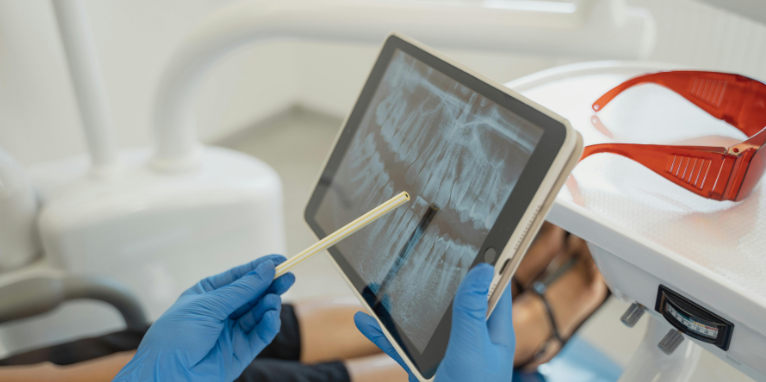
Tooth granuloma is a limited inflammatory formation at the root apex filled with granulation tissue. In our clinic, we successfully treat granulomas with conservative and surgical methods, aiming to preserve the tooth and prevent more serious complications such as cysts or purulent processes. Granuloma forms as the body's response to chronic infection in the root canal and can exist for a long time without symptoms. Our specialists have extensive experience in diagnosing and treating root apex granulomas, using modern methods and equipment.
We understand that many patients learn about granuloma presence accidentally during radiological examination, as this condition often does not manifest symptoms. In our dentistry, we strive to prevent granuloma growth and transformation into a cyst by performing timely treatment and regular control examinations. Proper treatment allows preserving the tooth and restoring its function.
What is Granuloma and Why it Forms
Granuloma is a rounded formation up to 5 mm in diameter at the tooth root apex, consisting of granulation tissue that forms in response to chronic inflammation. In our clinic, we observe that granuloma appears as the body's defensive reaction to bacterial infection present in the root canal. The body tries to isolate the infection focus by forming granulation tissue that surrounds the root apex and prevents inflammation from spreading further into bone tissue.
Our specialists note that the main cause of granuloma formation is untreated or poorly treated pulpitis. When pulp inflammation is not cured or treated improperly, infection enters the root canal, passes through the root apex and causes inflammation in surrounding tissue. Also, granuloma can form after trauma, tooth fracture, when pulp cavity is exposed and infected. In our dentistry, we often see granulomas after poorly performed root canal treatment, when canals were incompletely filled or infection was not completely removed.
Symptoms and Diagnosis
Granuloma's feature is that it can proceed long without symptoms. In our clinic, patients often learn about granuloma presence accidentally during radiological examination for other reasons or when preparing for prosthetics. Chronic form granuloma does not cause pain, tooth may slightly change color, appear certain heaviness feeling when chewing, but these symptoms are not pronounced and rarely make patient see doctor.
Our specialists pay attention that when granuloma exacerbates under provoking factors influence – cold, stress, immunity decrease – clear symptoms appear. Patient feels severe pain in affected tooth, tooth becomes sensitive to pressure, biting. Gum swelling and redness may appear in causative tooth projection, sometimes fistula forms – gum opening with purulent discharge. In general condition, body temperature may rise, general weakness appear. In such cases in our dentistry, patient contacts with painful tooth complaints, and we perform comprehensive diagnosis.
Difference Between Granuloma and Cyst
In our clinic, we often face question about difference between granuloma and tooth cyst. Our specialists explain that these are different stages of same pathological process. Granuloma is earlier, smaller formation up to 5 mm. When granuloma grows and reaches 5-10 mm size, it is called cystogranuloma. Formation over 10 mm is already considered cyst. Cyst has clear capsule and filled with fluid, while granuloma is granulation tissue.
On X-ray in our dentistry, these formations look like rounded darkenings at root apex. However, by size one can suspect granuloma or cyst. Accurate diagnosis often possible only after surgical removal by performing histological examination. Our doctors note that treatment tactics for granuloma and small cystogranuloma are similar – first we try conservative treatment through root canals. Large cysts exceeding 1-1.5 cm more often require surgical treatment.
Conservative Granuloma Treatment
In our clinic, we always strive to first apply conservative granuloma treatment through root canals, aiming to preserve tooth. This method is effective for small granulomas and cystogranulomas. Our specialists begin treatment from anesthesia and causative tooth isolation with rubber dam. If tooth was already treated before, we unfill root canals – remove old filling material with special solvents, files, ultrasound.
Then in our dentistry we perform thorough mechanical canal processing with endodontic instruments, expand canals, form required shape. Simultaneously intensive medicinal canal processing occurs – irrigation with large amounts of antiseptic solutions – sodium hypochlorite, chlorhexidine. Our doctors use ultrasound for irrigant activation, which significantly increases disinfection effectiveness. Important to completely remove infection from canal system, including side branches and deltas.
Temporary Filling with Granuloma
Granuloma treatment in our clinic is usually performed in several stages. After mechanical and medicinal processing, our specialists place medicinal paste based on calcium hydroxide into canals. This material has strong antibacterial action, creates alkaline environment unfavorable for bacteria, stimulates bone tissue regeneration at root apex. Calcium hydroxide helps reduce inflammation, promotes granuloma regression.
At this time in our dentistry, hermetic temporary filling is installed. We schedule patient repeat visit after 2-4 weeks depending on granuloma size and condition. Large granulomas may require longer treatment – several months with periodic temporary paste replacement. During this period, our doctors monitor dynamics – symptom reduction, radiological changes regression. If positive changes appear – granuloma reduction, periapical inflammation decrease – we proceed to permanent filling.
Permanent Canal Filling
After successful conservative granuloma treatment in our clinic, permanent root canal filling is performed. Our specialists remove medicinal paste from canals, perform final irrigation, dry canals. We use modern gutta-percha with endosealant obturation technique. Lateral condensation technique or thermoplasticized gutta-percha ensures hermetic three-dimensional canal sealing to root apex.
Necessarily in our dentistry we perform control X-ray after filling, assess canal filling quality. Canals must be filled densely, entire length, without voids. Then our doctors restore tooth crown part – install filling or, if tooth is significantly destroyed, recommend crown installation for tooth strengthening and fracture protection. Proper tooth restoration ensures its long service after treatment.
Surgical Treatment – Resection
When conservative treatment is ineffective or impossible, in our clinic we use surgical treatment – root apex resection with granuloma removal. This method is indicated with large granulomas and cysts when cannot cure through canals, with impossibility to quality retreat canals (post, post and core, crown presence), with perforation in lower third of root. Our specialists perform operation under local anesthesia.
We make small gum incision, form mucoperiosteal flap, expose bone in causative tooth area. Our doctors create opening in bone through which we access root apex and granuloma. We resect (cut off) root apex approximately 3 mm with granuloma removal. In our dentistry, canal is filled retrogradely – from root apex side with special materials. We carefully clean bone cavity, irrigate, place mucoperiosteal flap, suture wound.
Postoperative Period
After root apex resection in our clinic, we prescribe drug therapy for successful healing. Our specialists recommend painkillers and anti-inflammatory drugs – ibuprofen, ketoprofen – first 3-5 days. We prescribe antibiotics for 5-7 days course for infection prevention. Antihistamines help reduce swelling. First days our doctors recommend applying cold to cheek for swelling reduction.
Necessary to follow recommendations in our dentistry – do not eat 2-3 hours after operation, first day eat warm soft food, avoid hot, spicy, hard food. Do not rinse mouth first day, then make baths with antiseptics. Cannot smoke, consume alcohol, avoid physical exertion first 3-5 days. We schedule suture removal after 7-10 days and control examinations with X-ray after 3, 6 and 12 months for granuloma area healing monitoring.
Prognosis and Control After Treatment
With quality granuloma treatment in our clinic, prognosis is favorable. Our specialists note that after proper conservative or surgical treatment, granuloma decreases and disappears, bone tissue restoration occurs in root apex area. This process takes from several months to a year. We schedule regular control examinations with X-ray for dynamics monitoring.
On control X-rays in our dentistry, we assess granuloma area condition – whether darkening decreases, whether new bone tissue forms. Complete healing signs – periapical darkening disappearance, normal periodontal gap structure restoration. Our doctors note that success depends on many factors – granuloma size, treatment quality, patient immunity, recommendations compliance. With positive dynamics, can be calm that tooth is preserved for long.
Prevention
Granuloma prevention in our clinic begins from timely caries treatment and pulpitis. Our specialists recommend not leaving untreated carious teeth, as caries progresses, enters pulp cavity, causes pulpitis, and untreated pulpitis transforms into periodontitis with granuloma formation. Important to see dentist when first tooth problem signs appear – sensitivity, pain.
Also in our dentistry, we pay attention to canal treatment quality. Quality root canal treatment with ensuring complete canal system disinfection, hermetic filling prevents granuloma development in future. Our doctors recommend patients after pulpitis treatment to perform control radiological examinations after 6-12 months to timely detect periapical changes appearance. Regular oral hygiene, professional teeth cleaning twice a year, healthy lifestyle with immunity strengthening also contribute to granuloma prevention.
Frequently Asked Questions
Can granuloma disappear by itself without treatment?
No, granuloma will not disappear by itself without treatment. In our clinic, we explain to patients that granuloma is body's response to chronic infection in root canal. Until infection source is removed through root canal treatment, granuloma will remain and may grow, transform into cyst. Our specialists note that without treatment, granuloma periodically exacerbates, causing pain, swelling, may lead to tooth loss or serious complications – osteomyelitis. Professional treatment in our dentistry is necessary for tooth preservation.
Is granuloma treatment painful?
Granuloma treatment in our clinic is performed completely painlessly. Our specialists before starting procedure use quality local anesthesia that completely eliminates pain. During conservative treatment through root canals, patient does not feel pain. After anesthesia ends, slight discomfort may occur, which is easily controlled with painkillers. With surgical treatment – root apex resection – local anesthesia is also used. In our dentistry after operation, swelling and pain may occur for several days, but this is normal postoperative period, well controlled with medications.
Is operation necessarily required?
Not always. In our clinic, we first try conservative granuloma treatment through root canals. This method is effective for most small granulomas and cystogranulomas. Our specialists have extensive experience in conservative treatment and often achieve granuloma regression without operation. Surgical treatment – resection – is indicated only in certain cases: when conservative treatment is ineffective, when cannot quality retreat canals due to post or crown presence, with large cysts. In our dentistry, we individually assess each case and recommend optimal treatment method.
How long does treatment take?
Granuloma treatment duration in our clinic depends on chosen method. Conservative treatment usually requires 2-4 visits over several weeks or months period. During first visit, our specialists perform canal processing and place medicinal paste. Repeat visits – for dynamics assessment and paste replacement. Final permanent filling is performed after successful inflammation relief. Surgical treatment – resection – is performed in one visit, operation takes 40-60 minutes. In our dentistry, suture removal after 7-10 days. Complete healing with granuloma area restoration monitoring takes 6-12 months.