



Root Canal Treatment in Vilnius: Modern Endodontics
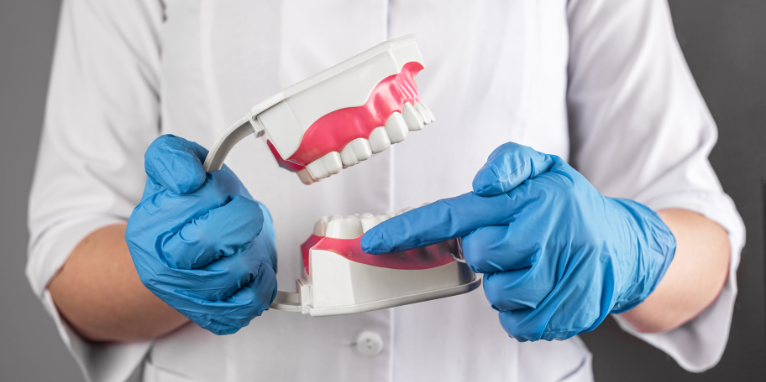
Root canal treatment is a complex of endodontic procedures aimed at preserving the tooth when its internal structures are affected. In our clinic, root canal treatment is carried out using advanced technologies and modern equipment, including dental microscopes and rotary endodontic systems. Our specialists help preserve teeth even in difficult cases when inflammation has spread to the root and surrounding tissues, preventing the need for extraction.
We understand that problems with the tooth root are often accompanied by severe pain and discomfort, so we try to see patients with acute conditions as soon as possible. In our dentistry, root treatment is performed painlessly, using quality anesthesia, and gives a long-term result, allowing you to preserve your own tooth for many years.
When Root Treatment is Necessary
In our clinic, we recommend root canal treatment for various diseases and conditions. The main indication is periodontitis, inflammation of the tissues surrounding the root apex. This disease develops as a complication of untreated pulpitis, when infection spreads from the root canals beyond the tooth. Our specialists often observe periodontitis also with poor quality previous canal treatment, when they were poorly filled or infection was not completely eliminated.
We perform root treatment when cysts and granulomas form at the root apex – these are pathological formations filled with granulation tissue or fluid that form in response to chronic infection. Treatment is also necessary for root fractures, perforations, root resorption. In our dentistry, we undertake root canal retreatment when previous treatment was performed poorly and complications developed.
Symptoms of Tooth Root Diseases
Tooth root diseases manifest with various symptoms, upon appearance of which we recommend our patients immediately contact our clinic. Acute periodontitis is characterized by intense constant pain in a specific tooth, which intensifies when biting, touching the tooth. The patient accurately indicates the sick tooth, which distinguishes periodontitis from pulpitis. A feeling may appear that the tooth has become longer, protruded from the socket.
Our specialists observe in acute periodontitis swelling and redness of the gum in the area of the causative tooth, pain on palpation, sometimes a fistula with purulent discharge forms. General symptoms are possible – body temperature rise, weakness, submandibular lymph node enlargement. Chronic periodontitis can proceed without symptoms or with periodic discomfort, heaviness in the tooth, pain when biting. In our clinic, such forms are often detected accidentally during radiological examination.
Diagnosis of Root Diseases
Quality diagnosis in our dentistry is the basis of successful root canal treatment. Our doctors begin with a thorough patient interview about the nature of complaints, time of their appearance, provoking factors. During examination, we assess the condition of the crown part of the tooth, mucous membrane around it, perform percussion – tapping on the tooth, which in periodontitis is sharply painful. Palpation of the gum in the projection of the root apex also causes pain.
A mandatory diagnostic stage in our clinic is radiological examination. We take targeted X-rays of the causative tooth or orthopantomogram. X-rays allow us to assess the condition of root canals, identify periapical changes – expansion of the periodontal gap, areas of bone tissue rarefaction at the root apex, cysts, granulomas. The X-ray shows the quality of previously performed canal treatment, presence of broken instruments, perforations. Our specialists use computed tomography for detailed three-dimensional visualization in complex cases.
Stages of Root Canal Treatment
Root canal treatment in our clinic is carried out according to a specific protocol. The procedure begins with quality anesthesia – we use modern anesthetics that ensure complete absence of pain during treatment. In acute inflammation, sometimes enhanced anesthesia or conduction anesthesia is required. Our specialists always achieve a comfortable state of the patient before starting the intervention.
After anesthesia, we isolate the tooth with a rubber dam to ensure sterility and protection from saliva. Then our doctors remove old fillings, unfill root canals, extract old filling material. If the canals were not previously treated, we create access to the pulp chamber, remove pulp remnants. Mechanical canal processing is performed using endodontic instruments to expand and give the correct conical shape.
Mechanical Root Canal Processing
In our dentistry, mechanical root canal processing is performed using modern rotary nickel-titanium instruments. These instruments have high flexibility and allow effective processing even of strongly curved canals without risk of perforation or step creation. Our specialists use endomotors with torque control, which ensures safety and prevents instrument breakage in the canal.
We use a system of sequential canal expansion with files of increasing size. Our doctors thoroughly process the entire canal length to the root apex, forming a conical shape necessary for quality filling. For accurate determination of working canal length in our clinic, apex locators are used – electronic devices that determine the distance to the root apex with high accuracy. Additionally, control X-rays are taken with instruments in canals.
Medicinal Canal Processing
Parallel to mechanical processing in our clinic, intensive medicinal root canal processing is performed. This is a critically important treatment stage, as mechanical instruments cannot clean all branches, deltas, dentin tubules. Our specialists use antiseptic solutions – sodium hypochlorite of various concentrations, chlorhexidine, EDTA. These solutions destroy bacteria, dissolve organic residues, remove the smear layer.
In our dentistry, ultrasonic irrigation activation is used – antiseptic solutions are activated by an ultrasonic tip, which significantly increases disinfection effectiveness. Ultrasound creates acoustic flows in the liquid that penetrate side branches and hard-to-reach areas of the root canal system. Our doctors perform irrigation with large volumes of solutions, which ensures thorough removal of infection and decay products.
Temporary Medicinal Filling
When treating tooth root with periodontitis in our clinic, temporary canal filling with medicinal pastes is often used. After mechanical and medicinal processing, our specialists place paste based on calcium hydroxide into the canals. This material has strong antibacterial action, creates an alkaline environment unfavorable for bacteria, stimulates bone tissue regeneration at the root apex.
We leave the medicinal paste in the canals for 1-4 weeks depending on inflammation severity. For this time, a temporary filling is installed. Our doctors schedule a repeat visit, during which dynamics are assessed – reduction or disappearance of symptoms, beginning of periapical tissue healing on control X-ray. With positive dynamics in our dentistry, permanent root canal filling is performed. If inflammation persists, temporary treatment may be continued.
Permanent Canal Filling
After complete root canal disinfection in our clinic, their permanent filling is performed. We use modern gutta-percha obturation technique with endosealant. Gutta-percha is a natural material, biocompatible, radiopaque, stable, not shrinking. Our specialists use lateral condensation technique – a main gutta-percha point and additional points with sealer are inserted into the canal, which are compacted laterally.
Also in our dentistry, vertical condensation technique of thermoplasticized gutta-percha is used. Heated gutta-percha becomes fluid and fills the entire canal space, including side branches and apical deltas. This ensures three-dimensional hermetic obturation. Our doctors necessarily take a control X-ray after filling to assess quality – canals should be filled densely, for the entire length, without voids and perforations.
Root Canal Retreatment
In our clinic, we often perform root canal retreatment when previous endodontic treatment was performed poorly or complications developed. Indications for retreatment – incomplete canal filling, material removal beyond the root apex, non-hermetic obturation with voids, not all canals were found and filled, broken instruments in canals, development or persistence of periapical inflammation.
Retreatment in our dentistry is technically more difficult than primary treatment. Our specialists remove old filling material from canals, which can be difficult, especially if resorcinol-formalin paste was used or canals were filled with cement. We use special solvents, ultrasonic tips, files for unfilling. We extract posts, broken instruments with the help of a microscope and special instruments. After complete canal cleaning, their re-processing and quality filling is performed.
Root Apex Resection
In some cases, conservative treatment through root canals is ineffective or impossible, and in our clinic surgical intervention may be recommended – root apex resection. This operation is indicated in the presence of large cysts and granulomas that do not respond to therapeutic treatment, when it is impossible to quality retreat canals due to complex anatomy, presence of a post, post and core, crown.
Our specialists perform root apex resection under local anesthesia. Through a small incision on the gum, we gain access to the bone, create an opening through which we remove the pathological focus together with the tooth root apex. The canal is filled retrogradely – from the apex side. The operation in our dentistry is minimally invasive, after it sutures are applied, anti-inflammatory drugs are prescribed. Healing occurs within 1-2 weeks. Resection allows preserving the tooth that would otherwise have to be extracted.
Tooth Restoration After Root Treatment
After root canal treatment in our clinic, quality restoration of the crown part is necessary. Our specialists choose the restoration method depending on the degree of tooth destruction. When most of the crown is preserved, we install a composite filling or ceramic inlay. If the tooth is destroyed significantly, more than half, in our dentistry crown installation is recommended.
The tooth after nerve removal and root canal treatment becomes more fragile, as its nutrition from within ceases. For strengthening with significant destruction, our doctors install a post and core or fiberglass post into the root canal, and fix a ceramic crown on top. The crown protects the tooth from fracture, ensures even distribution of chewing load. Proper restoration in our clinic guarantees long service of the treated tooth.
Prognosis and Control After Treatment
With quality root canal treatment in our dentistry, the prognosis is favorable. Our specialists use modern equipment, microscopes, quality materials, strictly follow treatment protocols, which ensures a high success rate. We schedule control examinations and radiological examinations after 3, 6 and 12 months after treatment to assess the dynamics of periapical tissue healing.
On control X-rays, our doctors assess whether bone tissue restoration is occurring in the area of the inflammation focus, whether the cyst or granuloma is decreasing. Complete healing can take from several months to a year. If control X-rays reveal absence of positive dynamics or deterioration, in our clinic canal retreatment or surgical intervention may be recommended. Regular control allows timely detection of problems and treatment correction.
Frequently Asked Questions
Can a tooth with a cyst on the root be saved?
In most cases in our clinic, a tooth with a cyst on the root can be preserved with conservative or surgical treatment. Our specialists perform quality root canal treatment or retreatment, temporary filling with medicinal pastes, which stimulates cyst resorption and bone tissue restoration. Small cysts and granulomas often completely disappear after proper endodontic treatment. With large cysts that do not respond to conservative treatment, we perform root apex resection with removal of the pathological focus. Tooth extraction is a last resort.
How long does root canal treatment take?
The duration of root treatment in our dentistry depends on the complexity of the case and chosen tactics. With one-stage treatment without complications, all procedures are performed in one visit lasting 1.5-2.5 hours. In the presence of periodontitis, cyst, after poor quality previous treatment, we use a multi-stage approach with temporary filling with medicinal pastes. In such cases, 2-4 visits are required with an interval of 1-4 weeks. Our specialists determine the optimal tactics individually for each patient.
Is root canal treatment painful?
Root canal treatment in our clinic is painless due to the use of quality anesthesia. We use modern effective anesthetics that provide deep pain relief for the entire procedure period. In acute inflammation, sometimes enhanced anesthesia or additional injections are required, but our specialists always achieve complete pain relief. During treatment, the patient does not experience pain. After the anesthesia wears off, slight pain is possible, which is relieved by ordinary painkillers and passes within a few days.
Why are repeat visits needed when treating the root?
When treating tooth root with periodontitis or cyst in our dentistry, a multi-stage approach is often used. At the first visit, our specialists perform mechanical and medicinal canal processing, place medicinal paste with antibacterial and anti-inflammatory action. The paste remains in the canals for 1-4 weeks for disinfection and healing stimulation. At the repeat visit, we assess dynamics, and with positive changes perform permanent canal filling. This approach ensures a more predictable result in complex cases, reduces the risk of complications after treatment.