



Tooth Extraction in Vilnius: Painless Surgery
Tooth extraction is a surgical procedure that is resorted to in cases when saving the tooth is impossible or inappropriate. In our clinic, tooth extraction is performed using modern techniques and quality anesthesia, which makes the procedure painless and as comfortable as possible for the patient. Our specialists always strive to preserve the patient's own teeth, and extraction is considered a last resort when all possibilities of conservative treatment are exhausted.
We understand that many patients experience fear before tooth extraction, so we create a calm atmosphere, explain each stage of the procedure in detail, apply effective anesthesia. In our dentistry, surgical intervention is performed quickly, atraumatically, with minimal discomfort for the patient. We provide detailed care recommendations after extraction for quick healing.
Indications for Tooth Extraction
In our clinic, we recommend tooth extraction only in the presence of absolute indications when it is impossible to save it. The main indication is significant destruction of the tooth's crown part by caries, when only roots or thin walls remain from the tooth, which cannot be restored with a filling or crown. Also, our specialists remove teeth in advanced periodontitis with critical third-fourth degree mobility, when the tooth holds only due to the gum.
We perform extraction when endodontic treatment is unsuccessful, when repeated root canal treatment and surgical methods did not produce results, inflammation at the root apex does not pass, large cysts form. Extraction is indicated in tooth root fracture when the fracture line passes in the depth of the gum and it is impossible to restore the tooth. In our dentistry, we remove teeth in acute purulent processes – periostitis, osteomyelitis, when the tooth is a source of infection and poses a threat to health.
Relative Indications for Extraction
In addition to absolute indications, in our clinic there are relative indications for tooth extraction, when the decision is made individually. Our specialists may recommend extraction during orthodontic treatment, when it is necessary to create space for aligning the dental arch and correcting the bite. Most often, first premolars or wisdom teeth are removed, which interfere with the correct location of other teeth.
We remove impacted and malpositioned wisdom teeth that are incorrectly located, cannot erupt completely, injure adjacent teeth or cheek, cause inflammation of surrounding tissues. Extraction is indicated when preparing for prosthetics, when the tooth interferes with prosthesis installation, is severely destroyed and cannot serve as support. In our dentistry, we carefully weigh all arguments for and against extraction with relative indications, discuss possible treatment options with the patient.
Contraindications to Extraction
There are situations when tooth extraction in our clinic is temporarily contraindicated or should be performed with special precautions. We postpone planned extraction in acute infectious diseases – ARVI, flu, exacerbation of chronic diseases. Our specialists postpone the procedure in exacerbation of cardiovascular diseases – recent heart attack, stroke, hypertensive crisis until condition stabilization.
Relative contraindication – first and third trimesters of pregnancy, when surgical interventions are undesirable. We perform extraction on pregnant women only for urgent indications with acute pain and inflammation. Our doctors cautiously perform extraction on patients with blood clotting disorders, taking anticoagulants – consultation with the attending physician is required, temporary drug withdrawal is possible. In oncological diseases in the jaw area in our dentistry, the decision is made jointly with an oncologist.
Preparation for Tooth Extraction
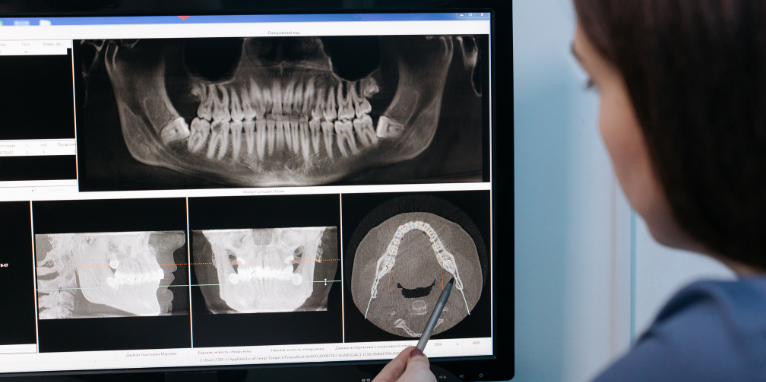
Before tooth extraction in our clinic, thorough preparation is performed. Our specialists collect anamnesis – clarify the presence of allergic reactions to anesthetics, general diseases, medications taken. We perform radiological examination to assess the condition of tooth roots, their number, shape, curvature, relation to anatomical structures – maxillary sinus, mandibular canal. This helps us plan the operation course and prevent complications.
Before the procedure, we recommend patients eat 1-2 hours before the visit, as after extraction it will be impossible to take food for several hours. It is necessary to brush teeth before the visit. Our doctors advise avoiding alcohol before extraction, as it reduces anesthesia effectiveness and increases bleeding risk. For patients with comorbidities, we may prescribe premedication – sedatives, antibiotics with high risk of infectious complications.
Anesthesia During Extraction
In our clinic, tooth extraction is performed under quality local anesthesia, which completely eliminates pain during the procedure. Our specialists use modern anesthetics based on articaine – they provide deep and long-lasting pain relief, have minimal side effects. We use cartridge syringes with thin needles, which makes the injection almost painless.
For upper jaw tooth extraction in our dentistry, infiltration anesthesia is usually sufficient – infiltration of the area around the tooth. For the lower jaw, our doctors more often use conduction anesthesia – mandibular nerve block, which anesthetizes half of the jaw. We wait for complete anesthesia onset before starting extraction, check sensitivity. If the patient experiences anxiety, we can offer sedation for maximum comfort.
Simple Tooth Extraction
Simple extraction in our clinic is performed with good preservation of the tooth's crown part, when it can be grasped with forceps. Our specialists select forceps of appropriate shape depending on the tooth to be removed. We apply forceps to the tooth crown, advancing the beaks under the gum for reliable grip. Then we perform rocking movements in various directions to destroy ligaments holding the tooth in the socket.
After achieving mobility, our doctors remove the tooth from the socket with rotational or traction movement. We examine the removed tooth to make sure of its integrity, that all roots are extracted. Then we perform socket revision, remove granulation tissue, fragments, irrigate with antiseptic solution. If the socket is large, in our dentistry we may approximate its edges with sutures for better healing. A sterile tampon is placed on the socket, which the patient bites for 15-20 minutes to stop bleeding.
Complex Tooth Extraction
Complex extraction in our clinic is required when the tooth crown is significantly destroyed, the tooth has curved roots, is impacted or malpositioned. Our specialists perform atypical extraction using additional instruments and techniques. We make an incision on the gum to provide access to the tooth, if necessary remove part of bone tissue with a bur to free the roots.
When removing multi-rooted teeth with destroyed crown, our doctors perform separation – sawing the tooth into parts, after which each root is removed separately with an elevator or forceps. This is less traumatic than trying to extract the tooth whole. For removing impacted wisdom teeth in our dentistry, access is formed through bone tissue, the tooth is fragmented and extracted in parts. After tooth extraction, we smooth sharp bone edges, irrigate the wound, suture the gum for better healing.
Wisdom Tooth Removal
Wisdom tooth removal in our clinic is one of the most frequent surgical procedures. Our specialists recommend eighth tooth removal with difficult eruption, when the tooth is partially covered by gingival hood and pericoronitis develops – inflammation of surrounding tissues. We remove wisdom teeth with their incorrect position, when they press on adjacent teeth, destroying them, disrupting the bite.
Lower wisdom tooth removal is often complex due to their location, curved roots, density of surrounding bone. In our dentistry, we carefully plan the operation based on X-rays, perform extraction atraumatically with minimal damage to surrounding tissues. After eighth tooth removal, our doctors necessarily suture the socket, prescribe anti-inflammatory drugs, provide detailed care recommendations. Healing after wisdom tooth removal takes 7-10 days.
Recommendations After Tooth Extraction
After tooth extraction in our clinic, we give patients detailed recommendations for quick and safe healing. During the first 2-3 hours, you cannot eat while anesthesia is working, to avoid accidentally biting the numb cheek or tongue. The first day you should avoid hot food and drinks – you can eat warm soft food, chew on the opposite side.
Our specialists warn that you cannot rinse your mouth on the first day, so as not to wash out the blood clot from the socket – it protects the wound from infection and is necessary for healing. From the second day, you can make baths – put antiseptic solution in your mouth, hold for several minutes and carefully spit out. We recommend avoiding physical exertion, overheating, visiting bath, sauna for the first 3 days. Do not smoke, consume alcohol, touch the socket with tongue, fingers, foreign objects.
Possible Complications
In our clinic, we make every effort to prevent complications after tooth extraction, but patients should know about possible situations. The most common complication is alveolitis, inflammation of the removed tooth socket. It develops when the blood clot falls out or does not form, socket infection. Manifested by increasing pain 2-3 days after extraction, bad breath, gray coating in the socket.
Our specialists advise immediately contacting our dentistry when these symptoms appear. We will perform socket treatment under anesthesia – remove necrotic tissues, irrigate with antiseptics, lay medicinal drug. You should also contact us with prolonged bleeding that does not stop for more than 2-3 hours, increasing swelling and pain, body temperature rise, numbness of lip or tongue persisting more than a day after extraction on the lower jaw. Our doctors will provide necessary assistance and prevent serious complications.
Healing After Extraction
The healing process after tooth extraction in our clinic proceeds in stages. On the first day, a blood clot forms, which fills the socket and protects it from infection. On days 3-4, granulation tissue begins to form, covering the socket from inside. By the end of the first week, granulations fill most of the socket, swelling and pain decrease. Our specialists note that after 2 weeks the gum practically heals.
Complete socket filling with bone tissue in our dentistry takes 2-3 months. During this time, gradual bone tissue remodeling occurs, the socket smooths with the jaw surface. Healing speed depends on tooth size, patient age, health condition, compliance with recommendations. Our doctors schedule a control examination 7-10 days after extraction to assess the healing process. When planning implantation, we recommend waiting for complete bone formation – 3-4 months after extraction.
Prosthetics After Extraction
After tooth extraction in our clinic, it is important to timely restore the integrity of the dental arch through prosthetics. Our specialists explain that prolonged tooth absence leads to negative consequences – adjacent teeth shift toward the defect, antagonist tooth protrudes from the socket, bite is disrupted, remaining teeth are overloaded, bone tissue atrophy occurs in the removed tooth area.
We recommend various prosthetics options depending on the clinical situation. The most physiological method is dental implantation with subsequent crown installation. The implant replaces the tooth root, prevents bone atrophy, does not require grinding adjacent teeth. In our dentistry, we also offer bridge prostheses, removable prostheses with multiple tooth absence. Our specialists will help choose the optimal dental arch restoration option taking into account oral cavity condition, wishes and patient's financial capabilities.
Frequently Asked Questions
Is tooth extraction painful?
Tooth extraction in our clinic is absolutely painless thanks to quality local anesthesia. Our specialists use modern effective anesthetics that completely block painful sensations. The injection itself may cause slight discomfort for a few seconds, but we use thin needles and careful injection technique. During extraction, the patient feels pressure, movements, but not pain. After anesthesia wears off, discomfort is possible, which is relieved by painkillers and passes in 1-3 days.
How long does tooth extraction take?
The duration of the procedure in our dentistry depends on case complexity. Simple tooth extraction with preserved crown our specialists perform in 10-20 minutes. Complex multi-rooted tooth extraction with destroyed crown may take 30-40 minutes. Impacted wisdom tooth removal is the longest procedure, requiring 40-60 minutes. We work carefully, do not rush to perform extraction as atraumatically as possible and minimize complication risk.
When can you eat after tooth extraction?
In our clinic, we recommend refraining from eating for 2-3 hours after extraction, while anesthesia is working and blood clot forms in the socket. Then you can eat warm soft food, chew on the opposite side from the extracted tooth. Our specialists advise avoiding hot, spicy, hard food for the first 2-3 days. Do not drink through a straw, as the vacuum created can lead to clot falling out from the socket. Normal nutrition can be resumed 3-5 days after healing.
What to do if socket bleeds?
Slight bleeding in the first hours after extraction is normal. In our dentistry, we place a sterile tampon on the socket, which needs to be bitten for 15-20 minutes for clot formation. If bleeding continues, our specialists recommend placing a new sterile tampon and biting it for 30-40 minutes, avoiding physical exertion, not rinsing mouth. If bleeding does not stop within 2-3 hours or resumes after stopping, it is necessary to urgently contact our clinic – we will perform additional measures to stop bleeding.