


Tooth Root with Cyst Removal in Vilnius: Effective Treatment
Tooth root with cyst removal is a surgical procedure required in cases when saving the tooth is impossible or inappropriate due to large cyst or tooth condition. In our clinic, we carefully assess each situation, strive to first preserve tooth with conservative methods or root apex resection, but when impossible, we perform tooth extraction with cyst removal. Tooth root cyst is pathological formation filled with fluid that can cause serious complications if not removed timely. Our specialists have extensive experience performing this operation and ensure safe, effective cyst removal with minimal patient discomfort.
We understand that patients are often concerned about cyst presence and fear complications. In our dentistry, we perform thorough diagnosis, explain situation in detail, discuss treatment options. Timely tooth extraction with cyst removal prevents inflammation spread, bone destruction, protects adjacent teeth. After operation, we provide detailed recommendations and monitor healing to ensure optimal result.
What is Tooth Cyst
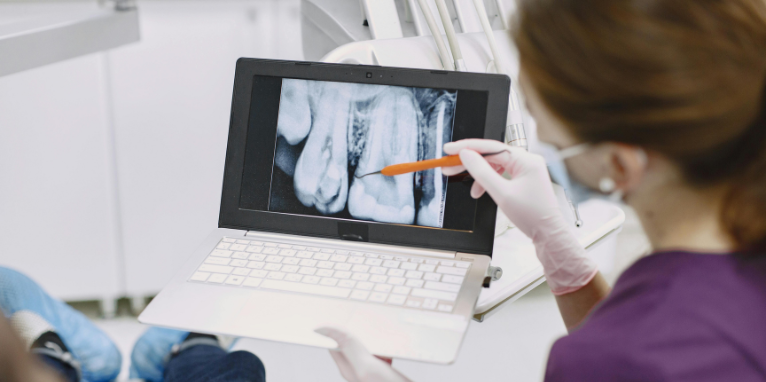
Tooth cyst is pathological formation at root apex, larger than 10 mm, having cavity filled with fluid and epithelial lining. In our clinic, we assess cysts based on radiological examinations – they appear as rounded darkenings with clear borders in root apex area. Cyst forms from smaller formations – granuloma (up to 5 mm) or cystogranuloma (5-10 mm), growing due to continuing inflammation.
Our specialists note that cyst is body's defensive reaction to constant infection source in tooth root canals. Epithelial lining separates infection from surrounding bone tissue, but cyst can grow, press surrounding tissues, destroy bone. As cyst grows, complication risk increases – fractures, tooth displacements, inflammations, therefore in our dentistry we recommend timely treatment.
Causes of Cyst Formation
Main cause of tooth root cyst formation is long-existing infection in root canals. In our clinic, we most often observe cysts as consequence of untreated or improperly treated pulpitis. When pulp becomes inflamed and necroses, bacteria colonize canal system, pass through root apex and cause chronic inflammation in periapical area. This leads to granuloma formation, which growing transforms into cyst.
Our specialists note that cyst often forms after poor quality endodontic treatment. If root canals are filled incompletely, empty spaces remain where bacteria accumulate, maintain inflammation, stimulate cyst growth. Also cysts can appear after tooth trauma, root fracture, pulp damage. In our dentistry, we see cysts near impacted, malpositioned teeth, especially wisdom teeth, when they have inflammatory sac (follicular cyst).
Symptoms and Diagnosis
Tooth cyst's feature is that it can develop long without symptoms. In our clinic, patients often learn about cyst presence accidentally during radiological examination for other reasons or when preparing for prosthetics. Small cysts do not cause pain, tooth may be numb due to previous pulpitis when nerve already died. As cyst grows, heaviness feeling when chewing may appear, slight gum swelling in area.
When process exacerbates in our dentistry, acute symptoms appear – severe pain, gum and cheek swelling, body temperature rise, general weakness. Tooth may become mobile, purulent discharge through fistula appear. In such cases, patient contacts us with complaints, and we perform comprehensive diagnosis – radiological examination showing cyst size, location, relation to adjacent structures. This helps us plan optimal treatment tactics.
When Tooth Extraction with Cyst is Necessary
In our clinic, we always strive to preserve tooth using conservative treatment through canals or root apex resection. However, there are situations when tooth extraction is unavoidable. Main indication in our dentistry is vertical tooth root fracture or crack, making hermetic canal filling impossible. We extract teeth with severe crown destruction when tooth cannot be restored even with post and crown.
Our specialists recommend tooth extraction with large cysts exceeding 2-3 cm, especially if they involve several teeth, destroyed much bone, cause tooth mobility. Also in our dentistry, extraction indication is unsuccessful conservative treatment or root resection when cyst reforms after treatment. We extract teeth with periodontal problems with deep pocket and bone loss, especially if cyst combines with periodontitis. Impacted teeth with large follicular cysts also require extraction.
Operation Preparation
Before tooth extraction with cyst in our clinic, thorough diagnosis and preparation are performed. Our specialists perform radiological examination – usually panoramic X-ray or computed tomography for large cysts. This allows us to assess cyst size, location, relation to adjacent teeth, nerves, sinuses, plan surgical approach. We collect anamnesis – clarify general diseases, allergies, medications taken.
With large cysts or operation against acute inflammation background in our dentistry, we may prescribe preoperative antibiotic course for 3-5 days. This helps reduce inflammation, decreases infection spread risk during operation. Our doctors recommend patients eat 1-2 hours before procedure, thoroughly brush teeth. We explain operation course, answer questions so patient understands what to expect and feels calmer.
Tooth Extraction with Cyst Removal
Operation in our clinic is performed under local anesthesia. Our specialists use modern anesthetics ensuring deep and long-lasting pain relief. We start from tooth extraction – if tooth is preserved, we remove it normally with forceps or elevators. If only roots remain or tooth is destroyed, we perform surgical extraction with mucoperiosteal flap formation, bone removal, root sectioning if needed.
After tooth extraction in our dentistry, we carefully remove cyst. We expand socket, with cutting or drilling remove bone tissue, expose cyst. Our doctors carefully separate cyst lining from surrounding bone with special instruments – curettes, excavators. Mandatory to remove entire cyst lining, as remaining fragments may lead to recurrence. We thoroughly clean bone cavity, remove granulation tissue, bone fragments.
Bone Cavity Treatment
After cyst removal in our clinic, bone cavity remains that must be properly treated. Our specialists carefully smooth sharp bone edges with drill, remove bone chips. We intensively irrigate cavity with antiseptic solutions – chlorhexidine, physiological solution – for remaining fragments removal and infection. In our dentistry, we assess bone cavity size and decide if filling needed.
For small cavities, usually natural blood clot formation suffices, which later organizes into bone tissue. For large cavities exceeding 2-3 cm, our doctors may recommend cavity filling with osteoplastic materials – synthetic bone substitute or collagen sponge. This accelerates bone regeneration, prevents cavity collapse, forms proper bone tissue. We place mucoperiosteal flap back, suture wound ensuring tightness.
Postoperative Period
After tooth extraction with cyst in our clinic, we provide patient detailed recommendations for successful healing. First 2-3 hours cannot eat while anesthesia works. First days our specialists recommend eating warm soft food, avoiding hot, spicy, hard food, chewing opposite side. Important not to rinse mouth first day not to wash out blood clot. From second day make baths with antiseptic – chlorhexidine several times daily.
In our dentistry, we prescribe drug therapy – painkillers and anti-inflammatories first 3-5 days, antibiotics 5-7 days course for infection prevention, antihistamines for swelling reduction. Our doctors recommend applying cold to cheek first 24 hours for swelling reduction. Avoid physical exertion, overheating, smoking, alcohol first 3-5 days. We schedule suture removal after 7-10 days.
Healing and Control
Healing process after tooth extraction with cyst in our clinic takes several weeks to months depending on cyst size. First 2-3 days may be swelling, pain, which is normal postoperative period. Our specialists note that symptoms should gradually decrease. Cavity gradually fills with granulation tissue, later – bone tissue. Complete bone restoration may take 6-12 months for large cysts.
In our dentistry, we schedule control examinations 1-2 days after operation, later after suture removal. We recommend radiological examination after 3-6 months for bone formation monitoring. At these examinations, our doctors assess healing course, cyst area condition, bone regeneration. Important to pay attention to complication signs – increasing swelling, pain, purulent discharge, temperature rise – and timely contact our clinic.
Complications and Their Prevention
Although tooth extraction with cyst in our clinic is performed according to all protocols, complications are possible. Our specialists note that most common complication is alveolitis, socket inflammation that develops with blood clot falling out or decay. When alveolitis symptoms appear – increasing pain on day 2-3, bad smell, gray coating – must contact us for treatment.
Possible complications in our dentistry include bleeding if continues longer than 2-3 hours or resumes, infection with suppuration, fistula formation, adjacent teeth damage, sinus membrane perforation when removing upper teeth cysts, nerve damage when removing lower teeth cysts. Our doctors carefully plan operation based on X-ray, work carefully, which minimizes complication risk. Proper postoperative period recommendations compliance also important for complication prevention.
Prosthetics After Extraction
After tooth extraction with cyst in our clinic, important to timely restore dental arch integrity. Our specialists recommend waiting complete bone healing – 3-4 months for small cysts, 6-12 months for large cysts – before planning prosthetics. This ensures strong bone foundation for implants or prostheses.
Optimal option in our dentistry is dental implantation with subsequent crown installation. Implant replaces tooth root, prevents bone atrophy, does not load adjacent teeth. We also offer bridge prostheses, removable prostheses depending on situation. Our doctors help choose optimal prosthetics option considering bone condition, adjacent teeth condition, wishes and financial capabilities.
Frequently Asked Questions
Can cyst be cured without tooth extraction?
In many cases yes. In our clinic, we strive to first preserve tooth using conservative treatment through root canals for small cysts up to 1-1.5 cm or root apex resection with cyst removal. These methods are often effective and allow preserving tooth. Our specialists extract tooth with cyst only when preservation impossible – with severe tooth destruction, root fracture, large cysts, unsuccessful conservative treatment. We individually assess each case and recommend optimal treatment option.
Is tooth extraction with cyst painful?
Operation in our clinic is performed under quality local anesthesia, which completely eliminates pain during procedure. Our specialists use modern anesthetics ensuring deep anesthesia. Patient feels pressure, movements, but not pain. After anesthesia ends, discomfort, swelling may occur, which is normal after surgical intervention. In our dentistry, we prescribe effective painkillers that well control pain syndrome. Most patients note that discomfort is acceptable and passes in several days.
How long does operation take?
Operation duration in our clinic depends on cyst size and situation complexity. Simple tooth extraction with small cyst removal our specialists perform in 30-40 minutes. More complex cases with large cysts, difficult access, bone removal may take 60-90 minutes. Our doctors work carefully and do not rush, aiming to perform operation as atraumatically as possible and completely remove cyst. Patient comfort and treatment quality are priorities.
Can cyst appear again?
After proper treatment in our clinic, recurrence risk is minimal. Our specialists carefully remove entire cyst lining, clean cavity, which prevents recurrence. However, if infection sources remain – untreated adjacent teeth with canal problems, poor hygiene – cyst may form again near another tooth. In our dentistry, we recommend regular control examinations, timely treatment of all teeth problems, good oral hygiene for cyst prevention. After tooth extraction with complete cyst removal, recurrence in same place is very unlikely.